
Get in the loop
We keep you connected on all things conversational, bringing you the latest news, events and innovations around the globe.

Call automation doesn’t have to be risky, long and costly
As explained in a previous post on “Ladies and gentlemen, we're experiencing some turbulence. Please hold the line while we try to find an available agent. ”, call automation solutions can help customer contact centers address several challenges at once, such as...

Ladies and gentlemen, we’re experiencing some turbulence. Please hold the line while we try to find an available agent.
Getting familiar with waiting times of over an hour before you can talk to an agent? Has it gotten worse with the pandemic? What is going on with call centers? Imagine you booked tickets to an upcoming event that you are really excited about. A few weeks later, you...
Voice agents VS. Chatbots: Where does the difference lie?
In our field of work, we often hear “Once we’re done with the voice assistant, we’ll just use the dialog to add a chatbot on our website!” or “now that our chatbot is done, it will be a piece of cake to make a voice bot”. Seemingly, it looks like we would only need to...

Exploring Approaches for a Question Answering System
Problem Definition The scientific literature presents several ways to approach the problem, but we were more specifically interested in the answer selection task. This task aims to predict the correct answer among a set of candidate answers. It assumes that there is...

There is a new IVR in town. Here’s what it means
And that’s nothing new, really. We used to call that “speech recognition IVR” and we've been delivering these conversational experiences for 20 years. What is new is that there are now novel technologies and platforms that promise to make it much faster and easier to...
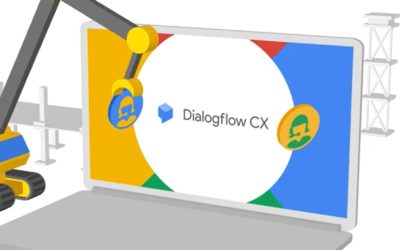
Takeaways from the VUX World Live Google Contact Centre AI with Antony Passemard
Dialogflow CX vs. ES The interview started with a comparison between Dialogflow CX and ES. CX is not just an incremental improvement over ES. It is in fact a complete redesign, with a more powerful and more intuitive dialog model. It also has a clean separation...

Mandate: Possible – The conversational application
My Zoom meeting is interrupted by the doorbell. It rings four times, following the usual pattern. I know what that means. Time for a new mandate. I apologize to my fellow agents, exit the session and rush to the door. As expected, no one is there, but I notice a small...

Chloe: the Evolution, or Building a Covid-19 Chatbot with Rasa – Part 2
Episode 1: NLU and Error Handling Flashback - Scene 4: Question Answering and Following TED As I mentioned in the first post, the goal with the Q&A flow was that the user could ask a question about Covid-19 and we would display the answer returned by Mila’s model...
Chloe: the Evolution, or Building a Covid-19 Chatbot with Rasa
Context When the confinement measures started in Canada, we were contacted by Dialogue, a telemedicine provider, to help them migrate Chloe, their Covid-19 rule-based chatbot, to a conversational chatbot, using Rasa, and add new functionalities to the bot. This would...

Conversational automation initiatives – Our Survey
Study on the use of conversational artificial intelligence in contact centers Nu Echo, an expert in intelligent conversational automation, is currently conducting a study to learn more about the vision and the challenges that contact centers face in adopting these new...

When “cancel” does not mean “cancel”
Interpreting global commands in conversational IVR To give callers some control over the conversation, a conversational IVR should always recognize, interpret, and respond to a handful of global commands. Well known global commands are “repeat”, “main menu”,...

Bringing Conversational IVR to the next level with Rasa Part 1: Generating complex responses
In our previous series on developing conversational IVR applications using Rasa, we described our approach to add VoiceXML support to the platform and develop a convincing banking demo using some advanced dialogue patterns. The custom dialogue management strategy...